

| Noise Control Strategy | Primary Mechanism | Common Materials Used | Primary OEM Applications |
|---|---|---|---|
| Acoustic Absorbers | Traps airborne sound waves and reduces reverberation inside enclosures | Open-cell polyether/polyester foams, PF-091 polyester fibers | Generator louvers, machinery enclosure linings, HVAC ducts |
| Acoustic Barriers | Blocks and reflects airborne sound transmission from passing through partitions | Mass-Loaded Vinyl (MLV), multi-layer foam-barrier composites | Generator housing walls, heavy truck firewalls, compressor housings |
| Vibration Damping | Converts resonant mechanical vibration into low-level thermal energy | Tech Damp™ (FD-100), PVC damping sheets, constrained layer composites | Thin sheet metal panels, equipment doors, vehicle floorboards |
| Thermal & Shielding Protection | Reflects radiant heat and insulates exhaust components | Tech Shield™ radiant sheets, Tech Shield Basalt Sleeves | Tier 4 diesel exhaust systems, turbo lines, hot engine compartments |
Industrial Soundproofing Solutions for OEMs

Technicon Acoustics is a leading producer of noise control solutions for commercial, industrial, and consumer-facing OEMs. These solutions include both acoustic absorption, sound transmission and vibration damping products. When needed, our technical and engineering team can work with you to design custom solutions.
Our manufacturing, engineering, and administrative experts deliver high-quality materials and parts that block, absorb, and isolate noise. We have experience developing solutions for power generation equipment, heavy truck and specialty vehicles, construction and agriculture equipment, mass transportation, air compressors, and marine applications.
Acoustic Absorbers and Sound Barriers
Sound waves act in different ways when they strike a surface. Some waves pass through the material, and others bounce off the surface. A harder, less porous surface will produce higher levels of reflection. A more porous material will allow for greater absorption. Acoustic absorption products are constructed from porous materials, lining hard surfaces that reflect sound.
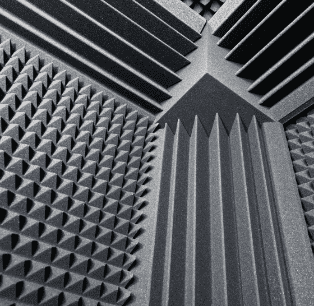
Acoustic absorbers are made from porous fiber-based materials or open-cell foam. This material prevents sound waves from bouncing off harder surfaces, like operator cabs or heavy equipment enclosures. This design improves the acoustic conditions in a designated space as opposed to preventing noise from going in or out of the area.
When OEMs integrate acoustic barriers into their equipment, end-users experience a safer product with less reverberation. With quieter operations, workers can avoid miscommunication errors and auditory injury.
MATERIALS USED
Three main materials are used for acoustic absorbers:
POLYETHER FOAM: In addition to its excellent sound absorption abilities, this material is popular due to its flexibility, thermal insulation, and compressibility.
POLYETHER FOAM: Polyester foam offers similar benefits to polyether foam, but with superior tensile strength.
FIBER-BASED ABSORBERS: This material provides an alternative solution for low-frequency noise. Additionally, they are able to withstand temperatures up to 350 °F (177 °C) and comply with UL94 HF1 standards.
APPLICATIONS
Sound absorbers and barriers have a variety of applications, including:
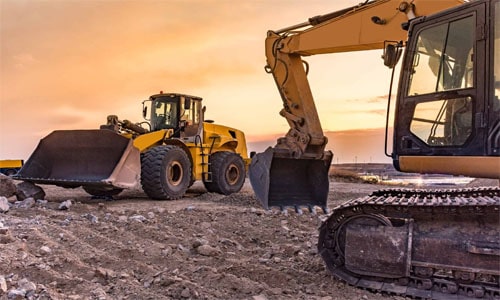
TRACTOR, EXCAVATOR, AND BULLDOZER CABS — Applying noise reduction material on top of the headliner or between the headliner and outer shell reduces noise coming from outside and the reverberation inside the cab. MLV sound barrier floor mats also block sound from entering the cab.
Learn More >
Portable and standby power generators — Acoustic absorbers can be used as lining for louvers. They can also line a tortuous airflow path to absorb noise.
Learn More >
Air compressors — Sound barriers can limit noise from air compressors by isolating it in a designated area. This significantly reduces the sound transmitted through floors, walls, and ceilings. Thickness of the sound absorber determines the exact level of noise reduction.
Learn More >
- Bulkheads
- Pipe wrap
- Firewalls
- Cab floors
- Heavy equipment enclosures
- Engine compartments
ACOUSTIC ABSORPTION OFFERINGS FROM TECHNICON ACOUSTICS
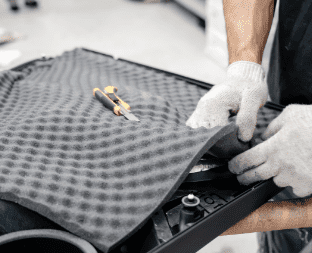
We provide both foam and fiber-based acoustic absorbers that can be customized for specific applications. Our polyether and polyester foams are available in a variety of thicknesses and facing options. Take a look at our product page for more details.
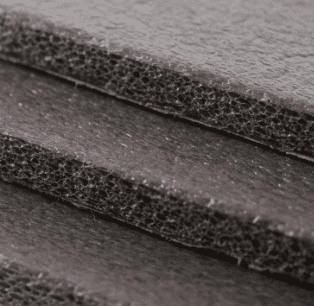
Technicon Acoustics combines decoupling and absorber products to produce composite materials that can block and absorb sound at the same time. Our MLV acoustic barriers are a great example of these high-performance products. Check out our product page to learn more.
Vibration Damping
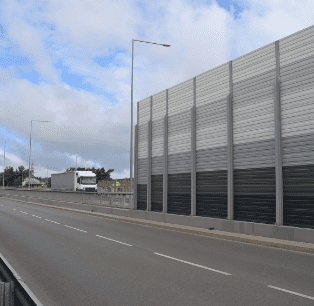
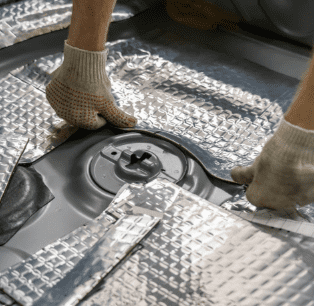
Vibration damping materials dissipate excess energy and lower noise levels. This term is most commonly used in electronic, ergonomic, and industrial applications and refers to two main techniques: structural damping and vibration isolation.
- STRUCTURAL DAMPING dissipates vibrations within the structure before they become audible noise. It is most effective in applications with resonant motion. Glass and certain metals have poor damping ability. Adding structural damping materials can reduce their vibrations, controlling resonance. This is especially important in managing more than one source of vibration or when materials vibrate near natural resonance levels.
- VIBRATION ISOLATORS are small components, such as steel springs or rubber pads. They isolate vibrating parts from the materials they rattle or rub against. Isolators and shock absorbers can separate and support assemblies of practically any size or weight, from small electronic components to large vehicle suspension systems.
MATERIALS USED
There are three main materials used in vibration damping: rubber, polyurethane, and PVC.
RUBBER: is a popular choice given that it absorbs energy before re-releasing it as thermal energy, making it excellent at isolating vibration energy. Rubber on its own doesn’t have damping abilities, but when combined with other materials it is highly effective.
POLYURETHANE: is a relatively new material in the field of vibration damping. Foam-like polyurethane substances can absorb a system’s excess energy. Polyurethane features cell structures and densities that can be customized to better suit specialized applications.
PVC: is effective at absorbing vibrations and resisting chemicals. While often used as sound barriers, they can also dampen vibrations in enclosures.
VIBRATION DAMPING IS USED IN A VARIETY OF APPLICATIONS:
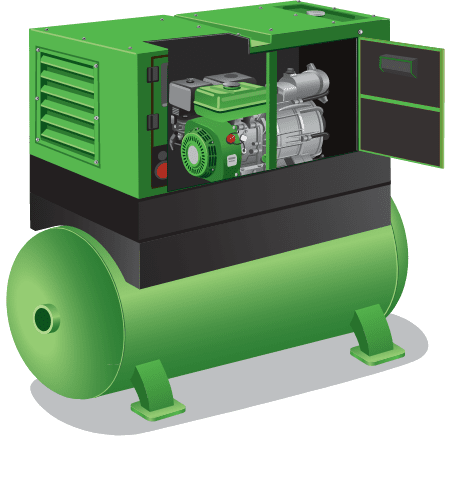
AIR COMPRESSORS — Vibration damping materials reduce the amount of structure-borne and airborne noise caused by decoupling the air compressor from the installation base. Constrained layer damping (CLD) is a commonly used material that reduces vibration in the system.
PORTABLE & STANDBY GENERATORS — Portable and standby generators — Weighted barriers line the sheet metal enclosures of the generator to dampen sound and vibration. Adding a decoupling foam to a decoupled weighted barrier prior to installation can also reduce noise.
VIBRATION DAMPING OFFERINGS FROM TECHNICON ACOUSTICS
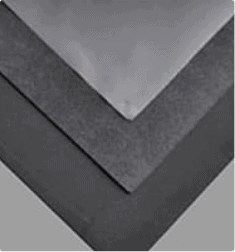
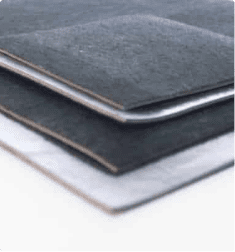
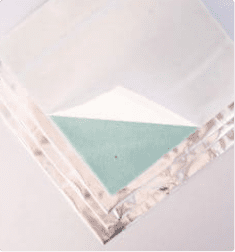
We offer a range of vibration and acoustic damping products:
Engineering Frequently Asked Questions: Industrial Noise & Vibration Control
Q: What is the difference between an acoustic absorber and an acoustic barrier?
A: Acoustic absorbers (such as open-cell foams or polyester fibers) are porous materials designed to trap sound waves and reduce echoes or reverberation inside an enclosure. Acoustic barriers (such as Mass-Loaded Vinyl) are dense, high-mass partitions designed to block sound waves from transmitting through walls, floors, or panels to the outside environment.
Q: How do I know whether my equipment needs vibration damping or sound absorption?
A: If your equipment’s noise is caused by structural panel resonance (such as rattling sheet metal or vibrating cabinet doors), you need a vibration-damping solution like Tech Damp to convert mechanical motion into thermal energy. If the issue is airborne sound echoing or escaping through intake/exhaust vents, acoustic absorbers or barriers are required.
Q: What is a multi-layer composite acoustic solution?
A: Multi-layer composites combine decoupling foam, a mass barrier (like MLV), and an acoustic absorber into a single integrated part. This allows design engineers to simultaneously block sound transmission, absorb internal noise, and decouple vibration with a single pre-cut component.
Q: Can Technicon Acoustics customize noise control materials for specific OEM equipment?
A: Yes. All noise control materials can be custom-fabricated using CNC knife cutting, waterjet cutting, or die-cutting to fit your exact part geometries, complete with pressure-sensitive adhesive (PSA) backings for rapid assembly-line installation.